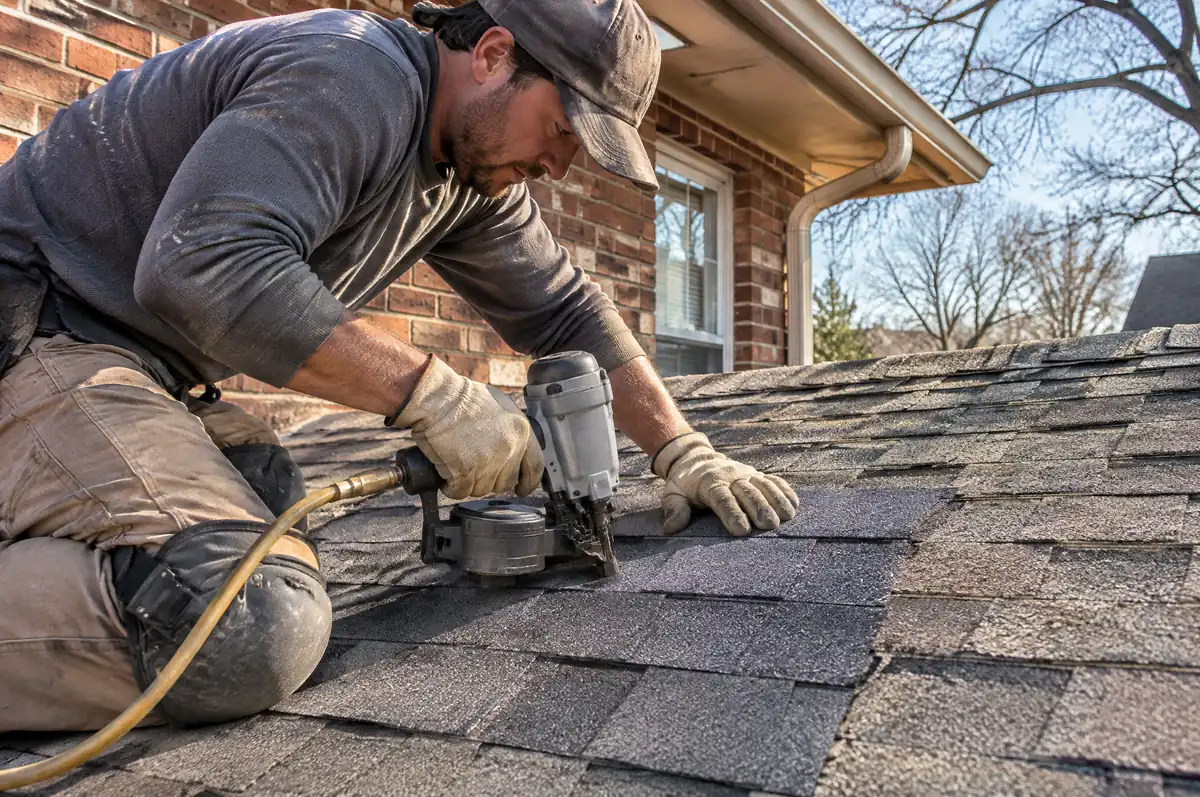
What counts as a roof repair?
A repair fixes a defined part of the roof and leaves the rest in place. That covers more jobs than most people expect. Typical repair calls in Oklahoma City include:
- Shingles torn off or creased by wind, usually along ridges, rakes and the windward slope.
- Cracked or split rubber pipe boots around plumbing vents. Oklahoma sun breaks these down long before the shingles around them wear out.
- Step and counter flashing that has pulled away where a roof meets a wall or chimney.
- Exposed or backed-out nails that let water track down the shank into the deck.
- Small areas of rot in the decking under a long-term drip.
- Ridge caps and hip shingles cracked by heat or a fallen limb.
If the problem is limited to one slope or one detail and the rest of the roof still has life in it, repair is usually the right call. If damage is spread across the whole roof, a replacement often costs less over time. Our page on roof replacement in Oklahoma City covers that side.
What are the signs your roof needs repair?
Some signs are obvious from the yard, others only show up in the attic. Walk around the house after any strong storm and look for:
- Shingle pieces or granules in the yard, gutters or at the bottom of downspouts.
- Lines of shingles that look raised or wavy rather than flat.
- Bare spots where the dark mat shows through.
- Metal vents, caps or flashing that look bent, loose or rusted.
- Brown rings on ceilings, peeling paint near the top of walls or a musty smell upstairs.
In the attic, with a flashlight, look for daylight through the boards, dark stains on the underside of the decking and damp insulation. Do not walk on the roof yourself, especially after rain, when shingles and dust make the surface slick.
How is a roof repair done?
- Inspect the whole roof, not just the obvious spot. A good roofer walks every slope, checks penetrations and looks in the attic. Wind damage on one side often means more on the ridge.
- Find matching materials. Shingle lines get discontinued, and colors fade in the sun. The roofer looks for the closest match in profile and color, and will tell you if the patch will show.
- Remove damaged pieces carefully. Neighboring shingles are lifted with a flat bar so their seal and nails are not ruined, damaged shingles come out, and the deck and underlayment are checked.
- Install and seal. New shingles go in with the correct nail pattern. Seal strips are activated by heat, and in cool weather a dab of roofing cement may be used so tabs do not lift before summer.
- Re-flash where needed. Flashing is replaced rather than smeared with caulk, which fails within a season or two in Oklahoma heat.
- Photograph the result. Before and after photos help with insurance and with future sales of the house.
What affects the cost of a roof repair?
Every repair is priced on the roof in front of the roofer, so treat any figure over the phone as a rough range. The main factors are:
| Factor | Why it matters |
|---|---|
| Roof pitch and height | Steep or two-storey roofs need more safety gear and slower work. |
| Material | Architectural shingles, metal, tile and slate-look products each need different parts and skills. |
| Hidden decking damage | Soft or rotted boards found under the shingles have to be replaced before new shingles go on. |
| Flashing and penetrations | Chimneys, skylights and wall junctions take more time than open field shingles. |
| Urgency | Night and weekend emergency calls may cost more than a scheduled visit. |
If a storm caused the damage, the repair may be part of an insurance claim. See roof insurance claims for how that usually works in Oklahoma.
How long does a roof repair take?
A few shingles or a pipe boot often takes an hour or two on site. A slope of wind damage or a chimney re-flash can take most of a day. Repairs that need matching shingles ordered in, or deck boards replaced, may take two visits. Weather matters too: roofers avoid working shingles in heavy rain and in very cold weather, when they crack instead of bending.
What should you do before the roofer arrives?
- Clear a path to the side of the house where the damage is, and move cars from under the work area.
- Note where any interior stains are, so the roofer can line them up with the roof above.
- Find any paperwork from the last roof job: shingle brand, color and year help with matching.
- Keep pets inside. Ladders and dropped nails do not mix with dogs in the yard.
When is a roof repair an emergency?
Call straight away, at any hour, if water is coming through a ceiling or light fixture, if a limb or debris has punched through the roof, or if large sections of shingles have blown off and more rain is forecast. In those cases the first step is usually a temporary tarp, then the permanent repair once the weather clears. Our emergency roof repair page explains what that visit involves.
Frequently asked questions
Can a roofer repair just part of my roof?
Yes. If the damage is limited to a few shingles, one slope or a single detail like a chimney or vent, a partial repair is common. The roofer should check the rest of the roof so you know whether more damage is waiting elsewhere.
Will new shingles match my old ones?
Often they come close, but shingles fade in Oklahoma sun and some colors are discontinued. A roofer can show you samples before the work and tell you honestly whether the patch will be visible from the street.
Is caulk a proper fix for a leak?
Not for long. Sealant can stop a drip temporarily, but it cracks in summer heat and winter cold. Lasting repairs replace the failed shingle, boot or flashing.
Should I repair or replace a roof that is 15 years old?
It depends on its condition. If shingles are still flexible, keep their granules and the damage is local, repair makes sense. If they are brittle, curling or bald across several slopes, money spent on repairs may be better put toward a replacement.
Do I need a permit for a roof repair in Oklahoma City?
Inside Oklahoma City limits, maintenance work of 500 square feet or less does not need the residential reroof permit. Larger jobs do. Suburbs set their own rules, so ask the contractor to confirm.