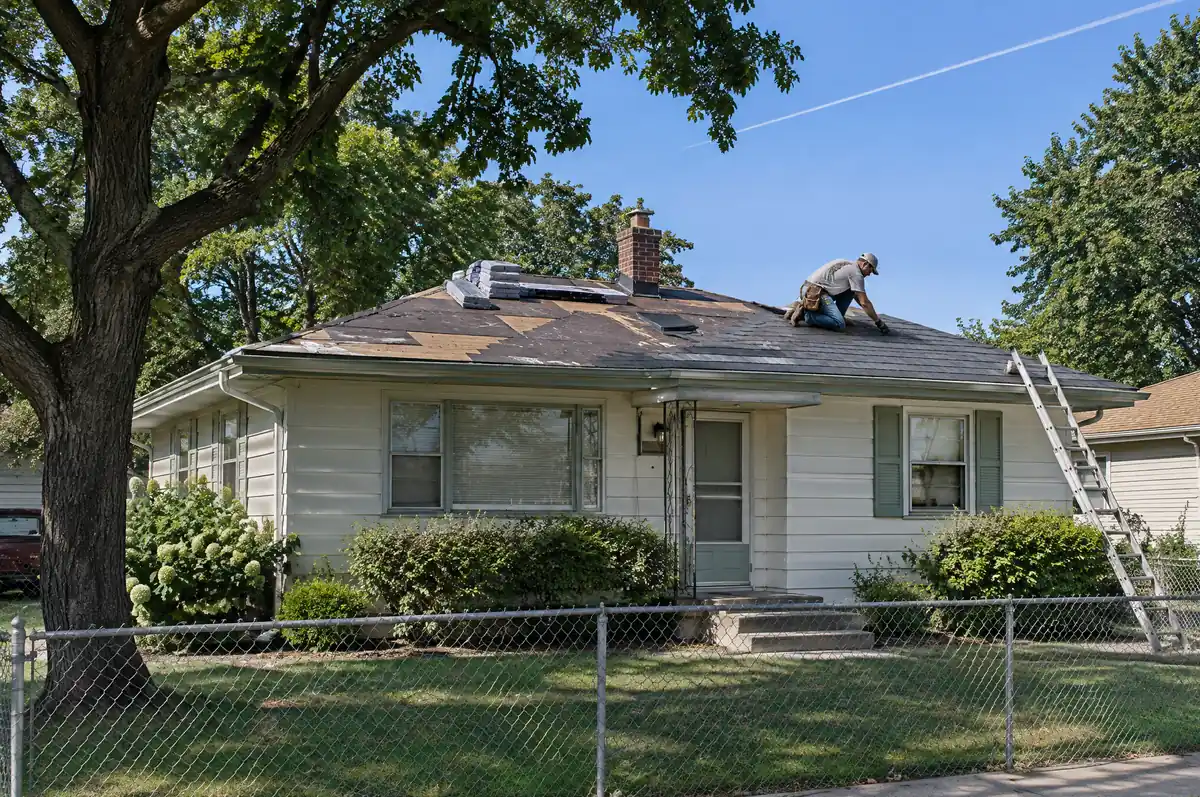
A planned city with mid-century roofs
Midwest City was laid out as a planned community for the workforce at the new air depot that became Tinker Air Force Base, and was incorporated on March 11, 1943. It grew extremely fast after the war, from about 10,000 residents in 1950 to 36,000 in 1960 and 48,000 by 1970. Large parts of the city still consist of the small brick and frame homes built in that period, with low-pitch hip roofs, shallow eaves and modest attics.
Roofers working in these neighborhoods regularly find:
- Plank or board decking with gaps, which may need new sheathing before a replacement.
- Low slopes near the minimum pitch for standard shingles, where water moves slowly and wind-driven rain gets under tabs.
- Limited attic ventilation, which bakes shingles in summer and shortens their life.
- Multiple layers of old shingles that have to come off.
- Additions and carports with low-slope roofs that need membrane rather than shingles.
Storms in Midwest City
The violent tornado of May 3, 1999, rated high-end F4 in Midwest City, killed three people here and damaged homes across the city. On May 8, 2003, an F4 tornado struck the southeast end of Tinker and parts of Midwest City. Hail and wind events are far more frequent, and the city's mature trees add limb damage to the list after strong storms.
Military families and roof repairs
With Tinker next door, many homes in Midwest City are owned by service members or rented to them, and households often move on a few years' notice. If you are selling ahead of a move, a roof inspection report helps answer buyer questions early. If you are renting out the house while stationed elsewhere, ask a neighbor or property manager to check for leaks after storms and keep your roofer's number handy.
Choosing the right roof for an older Midwest City home
| Situation | Common choice | Why |
|---|---|---|
| Main hip roof at normal pitch | Architectural or Class 4 shingles | Affordable, matches the neighborhood, impact rating helps with hail |
| Very low-pitch sections | Ice and water membrane under shingles, or modified bitumen | Low slopes need extra protection from slow-moving water |
| Flat carport or porch | Modified bitumen or TPO | Shingles are not designed for near-flat roofs |
| Poor ventilation | Added soffit intake and ridge vent | Cooler attic, longer shingle life |
Calling a roofer in Midwest City
Calls are answered 24/7. Mention your nearest major roads, such as S.E. 29th Street, Air Depot Boulevard or Midwest Boulevard, and whether the house has a low-slope carport or addition. For leaks, see roof leak repair.
Frequently asked questions
Why do older Midwest City roofs leak at the carport?
Many carports and additions were built with very low slopes that shingles cannot shed well. Membrane roofing such as modified bitumen or TPO is the lasting fix.
Does my 1950s house need new decking with a new roof?
Not always, but plank decking with gaps or soft spots usually needs new sheathing so shingles can be nailed properly. The roofer will know once the old shingles are off.
Who issues roofing permits in Midwest City?
Midwest City sets its own building and permit rules, separate from Oklahoma City's. Your roofer should confirm the current requirements.
Can I get my roof inspected while I am stationed away?
Yes. Many roofers can inspect the exterior and attic with a property manager or neighbor present and send you dated photos.