Which commercial roof system fits your building?
| System | What it is | Good for | Watch for |
|---|---|---|---|
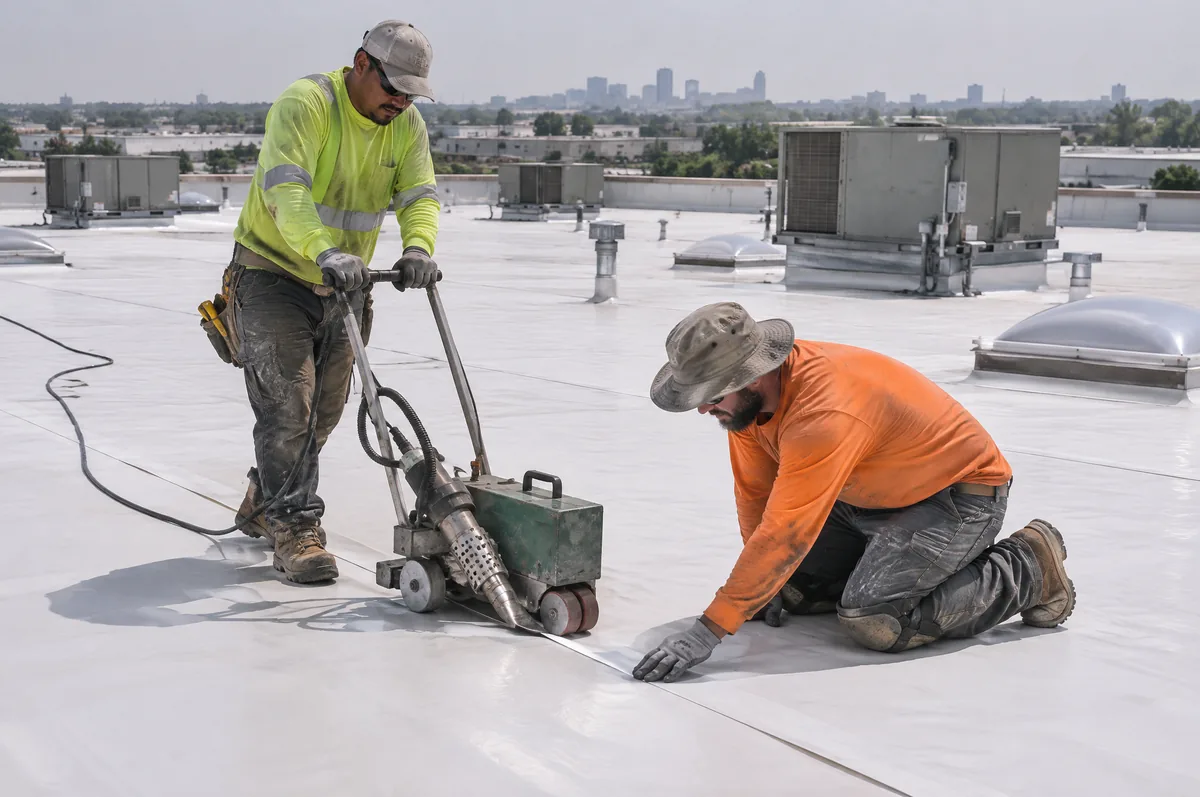
| TPO | White single-ply membrane with heat-welded seams | Reflecting summer heat, warehouses, retail | Seam quality, punctures from foot traffic and hail |
| EPDM | Black synthetic rubber membrane with taped or glued seams | Simple roofs, long track record | Seam tape aging, heat absorption |
| Modified bitumen | Asphalt-based rolls, torched or self-adhered, often in two plies | Roofs with heavy foot traffic, smaller buildings | Blistering and seam failure with age |
| Built-up (BUR) | Layers of felt and asphalt with gravel surface | Older buildings; very durable when maintained | Weight, hard to find leaks |
| Roof coatings | Silicone or acrylic applied over a sound existing roof | Extending roof life without tear-off | Only suitable if the existing roof and insulation are dry |
| Metal panel | Structural standing seam or R-panel | Shops, churches, metal buildings | Fastener and seam maintenance |
What goes wrong on flat roofs in Oklahoma City?
- Ponding water. Flat roofs are designed with slight slope to drains. Sagging decks, clogged drains and poorly placed crickets leave water standing, which speeds up membrane breakdown.
- Seam failures. Expansion and contraction through hot summers and freezing winters strains seams and flashings.
- Hail punctures and fractures. Large hail can crack membranes, crush insulation boards underneath and damage rooftop units.
- Flashing at walls and curbs. HVAC curbs, parapet walls, skylights and pipe penetrations are the usual leak points.
- Wet insulation. Water under the membrane soaks insulation boards, so a small leak spreads and lowers energy efficiency.
How does a commercial roofer handle a leak?
- Triage. For an active leak, the first visit protects the interior and stops water where possible.
- Inspection. The roofer walks the roof, checks drains, seams, flashings and curbs, and may take core samples to see what is underneath.
- Moisture survey. On larger roofs, infrared or moisture meter scans can map wet insulation, which decides between repair, coating and replacement.
- Report. Photos, a roof plan with problem areas marked and options with rough priorities.
- Repair or plan. Small issues are fixed; larger work is scheduled around your operations.
Repair, coat or replace?
If damage is local and insulation is dry, repairs are the obvious answer. If the membrane is aging but sound and the insulation is dry, a restoration coating can add years of life without a tear-off. If large areas of insulation are wet, or the roof has already been coated or re-covered, replacement is usually the only lasting fix. Building codes limit how many roof layers a building can carry, so ask how many your building already has.
Storm damage and commercial insurance
Commercial property policies vary even more than homeowners policies. Many have percentage deductibles for wind and hail, and some limit roof coverage to actual cash value. Document storm damage promptly, include rooftop equipment such as HVAC units and skylights, and involve your agent early. Our storm damage roof repair page explains the documentation process.
Keeping a commercial roof healthy
- Inspections in spring and fall, plus after any major hail or wind event.
- Clearing drains, scuppers and gutters of leaves and debris.
- Limiting foot traffic and using walk pads around rooftop units.
- Logging every repair so future roofers know the roof's history.
Checking a commercial roofer's credentials
Oklahoma requires roofing contractors doing commercial work to hold a commercial endorsement on their Construction Industries Board registration, including workers' compensation insurance on file. Ask for the registration number and verify it on the board's website before work starts.
Frequently asked questions
What is the most common commercial roof in Oklahoma City?
White TPO single-ply membranes are widely used on new and replacement low-slope roofs because they reflect summer heat. EPDM, modified bitumen and metal are also common.
Can a roof coating fix a leaking flat roof?
A coating can extend the life of a sound roof, but it is not a fix for wet insulation or failed seams. Leaks need repair first, and wet areas usually need replacing before any coating.
How long does a commercial roof replacement take?
It depends on size, system and access. Many projects are phased so the building can stay open, with each section made watertight at the end of the day.
Do commercial roofers need special registration in Oklahoma?
Yes. Contractors doing commercial roofing need a commercial endorsement on their Oklahoma Construction Industries Board roofing registration. Ask for the number and verify it.
Can you work around our business hours?
Many providers schedule noisy work, tear-off and deliveries around tenants and customers. Discuss timing, access and safety when you request the estimate.