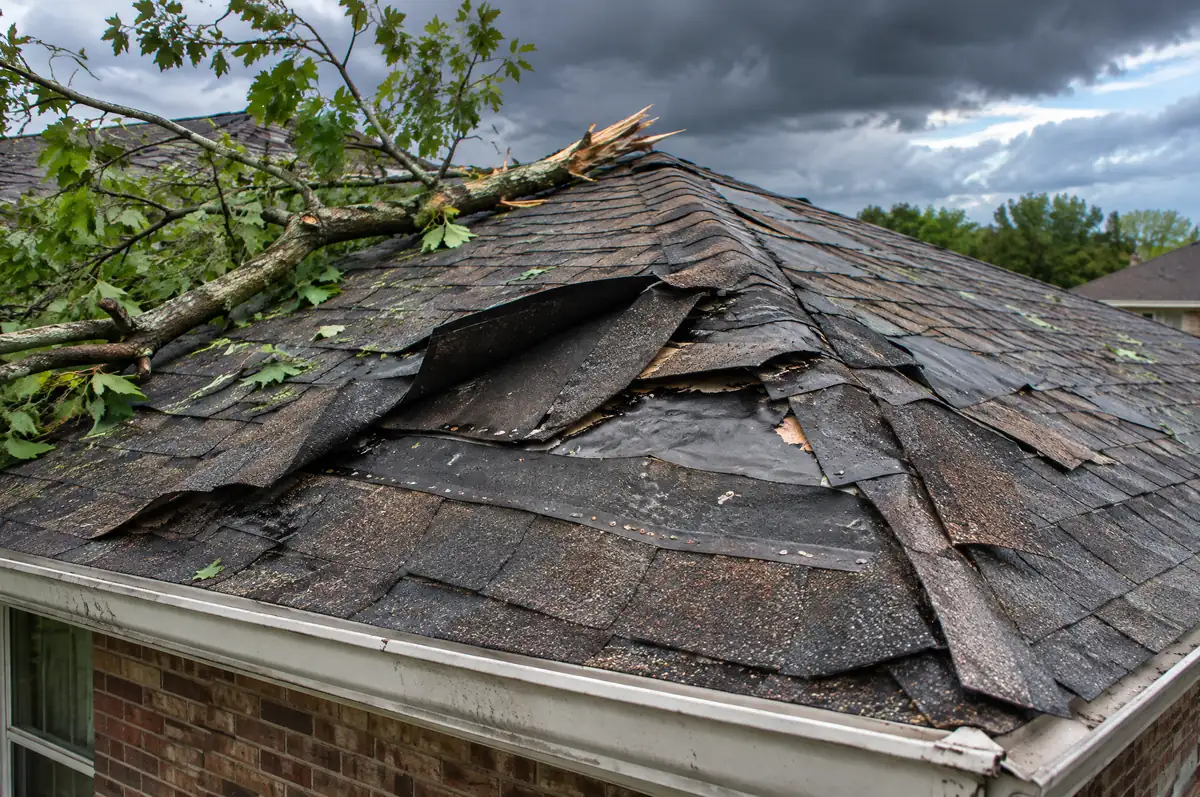
What does wind do to a roof?
Asphalt shingles are held down by nails and by a strip of adhesive that bonds each course to the one below once the sun warms it. Strong gusts get under the leading edge and flex the shingle. Even when it lays back down, the seal may be broken, leaving a shingle that lifts in every breeze afterwards. Eventually it creases along the nail line and tears off.
The damage follows a pattern. Edges, rakes, ridges and corners take the highest uplift, and the slope facing the storm takes the most. In the Oklahoma City metro, damaging winds come from three directions:
- Straight-line winds from severe thunderstorms, often 60 mph or more, the most common source of wind claims.
- Downbursts and microbursts, which hit a small area very hard and can look like tornado damage.
- Tornadoes, which range from weak spin-ups that peel shingles to violent storms like those that struck Moore in 1999 and 2013.
How do you spot storm damage after a storm?
From the ground, look for shingle pieces in the yard, a ridge line with gaps, shingles that look lifted or folded back, and missing drip edge or gutter sections. Check the attic for daylight and wet insulation. Signs that are easy to miss:
- A row of shingles with a straight, shiny line across them, where the tab was folded back and creased.
- Exposed nail heads along a course.
- Bent or missing flashing at chimneys and walls.
- Soffit and fascia pulled away from the house, which can let wind and water into the attic.
Hail often arrives in the same storm, so it pays to check for both. See hail damage roof repair for what hail looks like.
| Wind damage | Hail damage | |
|---|---|---|
| Where it shows | Edges, ridges, rakes, windward slope | Across the slopes facing the storm |
| What it looks like | Lifted, creased, torn or missing shingles | Round bruises, granule loss, cracked mat |
| Clues on the ground | Whole shingles and tabs in the yard | Granules in gutters, dented metal |
| Usual repair | Replace and re-seal affected courses | Repair a slope or replace the roof |
How is storm damage repaired?
- Make it safe. Limbs are removed from the roof, openings are covered with tarps or temporary sheathing, and any hanging gutters are secured.
- Inspect and document. Each slope is photographed, lifted and creased shingles are tested, and the attic is checked for water.
- Talk to your insurer. If the damage is significant, open a claim and share the photos. Keep receipts for emergency work.
- Repair or replace. Lifted courses are replaced with new shingles nailed to the manufacturer's high-wind pattern. Where wind damage is widespread or the shingles are too brittle to lift without breaking, replacing the roof may be the only lasting fix.
- Restore edges. New drip edge, starter strips and ridge caps help the roof resist the next storm.
What affects the cost of storm repairs?
- How much of the roof is damaged, and whether the shingles can be matched.
- Structural damage to rafters, decking or fascia from a fallen tree.
- Emergency work at night or during an active storm.
- Tree removal, which is often a separate trade.
- Upgrades such as high-wind nailing, enhanced starter strips or impact-rated shingles.
What should you do right after a storm?
- Stay off the roof and away from downed power lines. Call your utility for any line on or near the house.
- Photograph damage from the ground and inside the house, with the date.
- Move belongings away from leaks and catch water in buckets.
- Call for emergency tarping if there is an opening and rain is coming. See emergency roof repair.
- Be cautious with door-to-door crews. Ask for their Oklahoma roofing registration and look it up.
When is storm damage an emergency?
If you can see sky through the roof, water is running inside, a tree is resting on the house or a large section of shingles is gone with more storms in the forecast, call immediately. Calls are answered 24/7, and the first job is to stop water getting in.
Frequently asked questions
Does insurance cover wind damage to a roof?
Most Oklahoma homeowners policies cover sudden wind damage, though many have a separate wind and hail deductible, often a percentage of the home's insured value. Check your declarations page to see which deductible applies.
Can lifted shingles be glued back down?
Sometimes a shingle that lifted without creasing can be re-sealed. Creased or torn shingles have lost their strength and should be replaced, which is the more lasting fix.
My roof looks fine. Could it still have wind damage?
Yes. Broken seal strips are hard to see from the ground, and a shingle can lie flat between gusts. An inspection that lifts and checks shingles along the edges and ridge will find it.
Who removes a tree from my roof?
A tree service usually removes the tree, then the roofer repairs the structure and roof. In an emergency, a roofer can tarp around the damage until the tree is cleared.
How fast should storm damage be repaired?
As soon as practical. Open or loosened shingles let water into the deck with every rain, and many policies expect you to prevent further damage once you know about it.