Where do most roof leaks start?
On Oklahoma City homes, leaks usually begin at the places where the roof is interrupted, not in the middle of a slope:
- Pipe boots. The rubber collar around plumbing vents cracks in the sun, often years before the shingles wear out. This is one of the most common leak calls in the metro.
- Chimney flashing. Brick chimneys move with the house. Old step and counter flashing loosens, and mortar joints at the top let water behind the metal.
- Wall junctions. Where a lower roof meets a second-storey wall, missing kick-out flashing sends water behind siding.
- Valleys. Two slopes channel water into one line. Debris, worn shingles or a poorly cut valley lets it through.
- Skylights. Failed seals or flashing kits around older skylights.
- Storm damage. Hail-cracked shingles or wind-lifted tabs on an otherwise sound roof.
- Ice dams. During winter ice storms, meltwater can back up under shingles at the eaves.
How does a roofer find a leak?
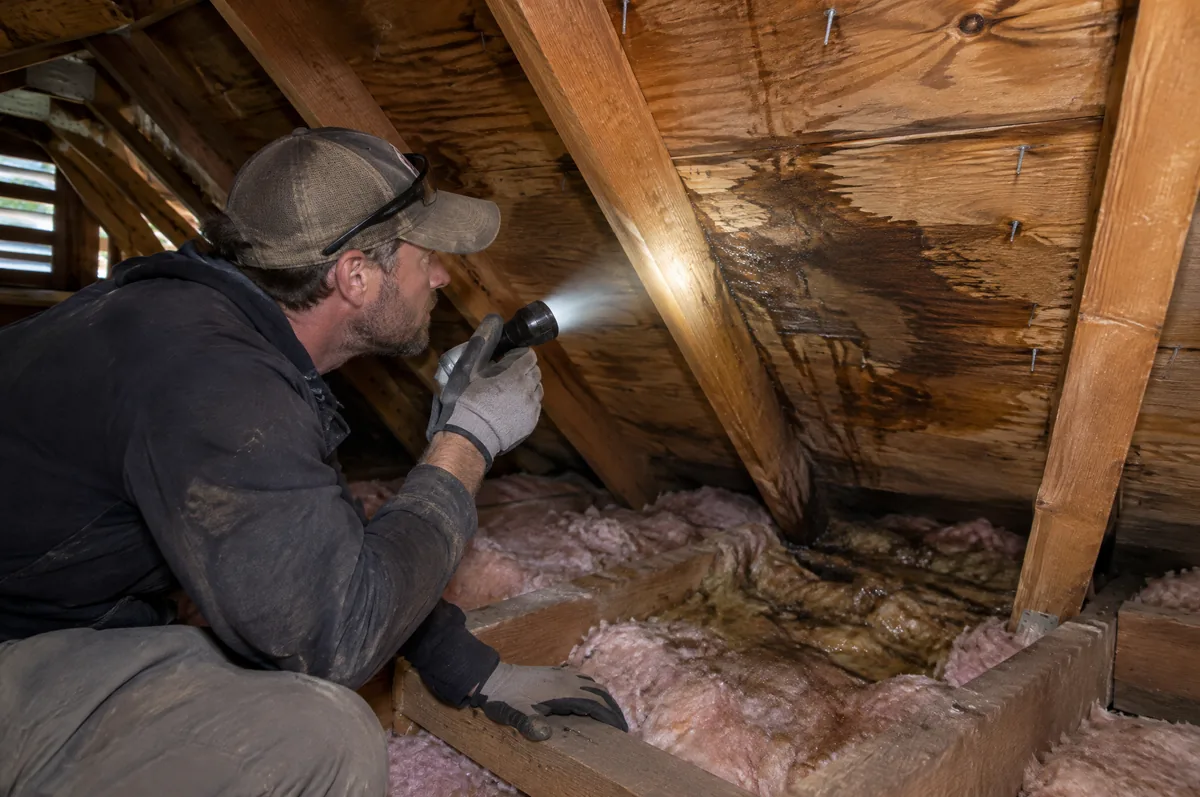
Water runs along rafters and the underside of the deck before it drips, so the stain can be several feet from the hole. A roofer works from both sides:
- Inside first. Locate the stain, then go into the attic directly above and follow the water trail uphill along wood, nails and insulation.
- Measure and match. Measure from a known point, such as a vent pipe or wall, so the location can be found on the roof surface.
- Inspect the roof surface. Check every penetration, flashing and shingle uphill of the spot.
- Water test if needed. On stubborn leaks, a hose is run on one section at a time while someone watches in the attic.
How are common leaks fixed?
| Source | Quick fix to avoid | Lasting repair |
|---|---|---|
| Cracked pipe boot | Caulk around the collar | Replace the boot and reseat the surrounding shingles |
| Chimney flashing | Tar smeared over gaps | New step and counter flashing, cut into mortar joints |
| Wall junction | Sealant along siding | Install kick-out and step flashing behind the siding |
| Valley | Patching single shingles | Re-lay the valley over new ice and water membrane |
| Skylight | Silicone on the frame | New flashing kit or skylight replacement |
Wet decking is cut out and replaced, and damp insulation is pulled so the attic can dry. If the leak has been going on for a while, check for mold and ask whether drywall needs replacing.
What affects the cost of a leak repair?
- How hard the leak is to trace, especially intermittent leaks that only show in wind-driven rain.
- The detail involved. A pipe boot is quick; chimney flashing takes longer.
- Deck damage found when the shingles come up.
- Roof pitch, height and material.
- Interior repairs, which are usually a separate trade.
Is a leak covered by insurance?
It depends on the cause. Leaks from a sudden event such as hail, wind or a falling limb are often covered under a homeowners policy. Leaks caused by age, wear or poor maintenance usually are not. A roofer's inspection notes help your insurer decide which applies. See roof insurance claims.
What should you do before the roofer comes?
- Catch water and move belongings. Photograph the stain and any drips with the date.
- If you can reach the attic safely, put a bin under the drip and a board across the joists to stand on. Never step between joists.
- Note when the leak shows up: every rain, only heavy rain, or only with wind from one direction. That detail helps trace it.
Frequently asked questions
Why does my roof only leak in some storms?
Leaks that appear only with heavy or wind-driven rain usually come from flashing or wall junctions where water is pushed sideways. A water test on that section often finds it.
Can a leak be fixed in the rain?
A crew can tarp a leaking area in the rain, but permanent repairs to shingles and flashing are done when the roof is dry, so sealants and adhesives bond properly.
Is a small ceiling stain worth calling about?
Yes. Small stains mean water is reaching the drywall, so the deck and insulation above may already be wet. Early repairs are simpler and cheaper than fixing rot or mold later.
Do I need a new roof if it leaks?
Not usually. Most leaks come from one failed detail and can be repaired. Replacement makes sense when leaks keep appearing in different places on an old roof.
How long does a leak repair last?
A repair that replaces the failed boot, flashing or shingles, rather than covering it with sealant, should last as long as the surrounding roof.