The short version
| Situation | Usually |
|---|---|
| A few hits on one or two slopes, roof under about 10 years old | Repair |
| Only vents, gutters or flashing dented | Repair or replace those parts |
| Functional hits across most slopes | Replace |
| Shingles brittle and crack when lifted | Replace |
| Shingle line discontinued and no close match exists | Often replace, depending on policy |
| Roof already has two layers | Replace with full tear-off |
The rest of this guide explains each factor, so you can follow your roofer's and adjuster's reasoning and ask the right questions.
Factor 1: How widespread is the damage?
Roofers and insurance adjusters usually assess hail damage slope by slope. On each slope, they look at how many functional hits there are, typically by counting them in a 10-by-10-foot test square. A slope with only a couple of hits may be repaired by replacing those shingles. A slope with many hits has lost so much protection that replacing individual shingles would mean replacing most of the slope anyway.
When most slopes are badly hit, replacing the whole roof is simpler, more durable and often cheaper than piecing it together. Insurers have their own internal guidelines for where that line falls, which is why two roofs that look similar can get different decisions.
Factor 2: How old and flexible are the shingles?
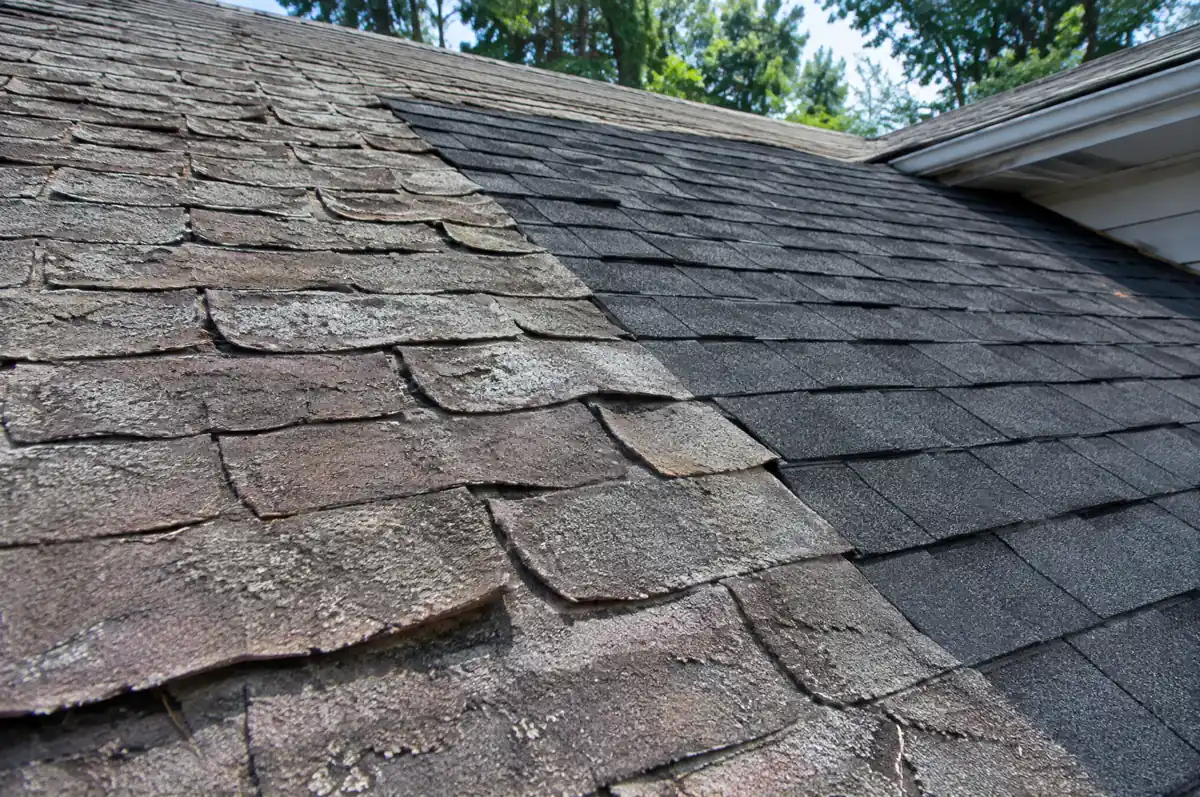
New asphalt shingles are flexible. A roofer can lift the course above a damaged shingle, pull the nails, slide a new one in and reseal it without harming its neighbors. After years of Oklahoma heat, shingles lose their oils and become brittle. Lifting them to make a repair can crack the very shingles you are trying to save.
A good roofer will test this before recommending a repair: gently lifting a tab on a few slopes to see if it bends or breaks. If old shingles crack during the test, a repair will likely create more damage than it fixes. This is sometimes called a "brittleness test," and it is worth asking about.
Factor 3: Can the new shingles match?
Even when the same brand and color are available, new shingles rarely match old ones exactly, because the old ones have faded and weathered. Manufacturers also change and discontinue product lines. A patch that is clearly a different color or profile may bother you, and it can affect resale value.
How insurers handle mismatch varies. Some policies and insurers consider matching when deciding on a repair; others do not. Ask your roofer to show you the closest available shingle beside your existing roof, and ask your insurer how they handle matching if you are told a repair is enough.
Factor 4: What will insurance pay?
If the damage is covered, the insurer's decision on repair versus replacement largely decides what you will spend. Key points:
- If the claim covers a full replacement, your cost is usually your deductible (plus depreciation, on an actual cash value policy).
- If the claim covers only a repair, you can still choose to replace, but you pay the difference.
- If the damage is under your deductible, you pay for whichever option you choose.
See our guide does insurance cover hail damage to a roof? for more on deductibles and ACV versus RCV.
Factor 5: How long will you stay in the house?
If you plan to sell within a couple of years, a clean, documented repair or a full replacement both help buyers. A visibly mismatched patch can raise questions in an inspection. If you plan to stay for many years, it may make sense to replace and upgrade, for example to Class 4 impact-resistant shingles that cut the risk of the next claim and may lower your premium.
Factor 6: Hidden problems
A repair only fixes what can be seen. A replacement exposes the deck, so rotted boards, old leaks and poor nailing are found and fixed. If your roof has a history of leaks, an older plank deck, or poor ventilation, the extra cost of replacement buys you a fully sound roof system.
Comparing the two options side by side
| Repair | Replace | |
|---|---|---|
| Upfront cost | Lower | Higher, though often largely covered by insurance |
| Time on site | Hours to a day | One to three days for most homes |
| Appearance | Patches may show | Uniform new roof |
| Hidden damage | May stay hidden | Deck exposed and fixed |
| Chance to upgrade | Limited | Impact-rated shingles, better ventilation, FORTIFIED |
| Permit in Oklahoma City | Not needed for maintenance of 500 sq ft or less | Residential reroof permit required |
Questions to ask your roofer
- How many hits did you find per test square on each slope?
- Did you test the shingles for brittleness? What happened?
- Can you show me the closest matching shingle?
- If we repair now, what is the likely life of the rest of the roof?
- If we replace, what upgrades would you recommend and what would they cost me?
- Are you registered with the Oklahoma Construction Industries Board? What is your number?
Next steps
If you have not had a roofer look at the damage yet, start with a roof inspection. If replacement is the answer, our roof replacement page explains the process, and the Oklahoma City roofing permit guide covers the paperwork.
Frequently asked questions
Can I repair just the hail-damaged slope of my roof?
Often yes, if the damage is limited to one or two slopes and the shingles are still flexible. The roofer should test them and show you how well new shingles will match.
What is a brittleness test?
It is a simple check where a roofer gently lifts shingle tabs to see if they bend or crack. Brittle shingles break during repairs, which makes replacement the better option.
Will insurance pay to replace if my shingles cannot be matched?
It depends on your insurer and policy. Some consider matching when deciding repair versus replacement, and others do not. Ask your insurer directly.
Is it worth replacing a roof that is only slightly damaged?
If insurance only covers a repair, replacement is your cost. It may be worth it if the roof is older, you plan to stay, or you want impact-resistant shingles.
Do I need a permit to repair hail damage in Oklahoma City?
Inside Oklahoma City limits, maintenance work of 500 square feet or less does not need the residential reroof permit. A full replacement does.